
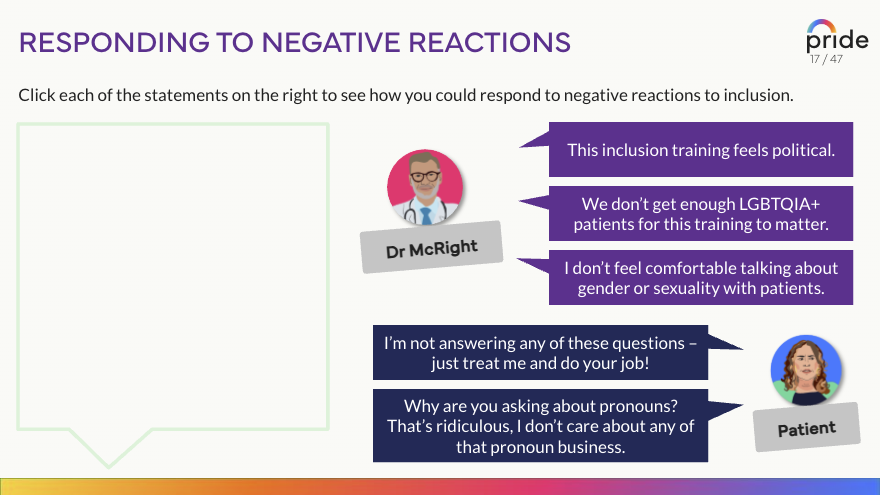
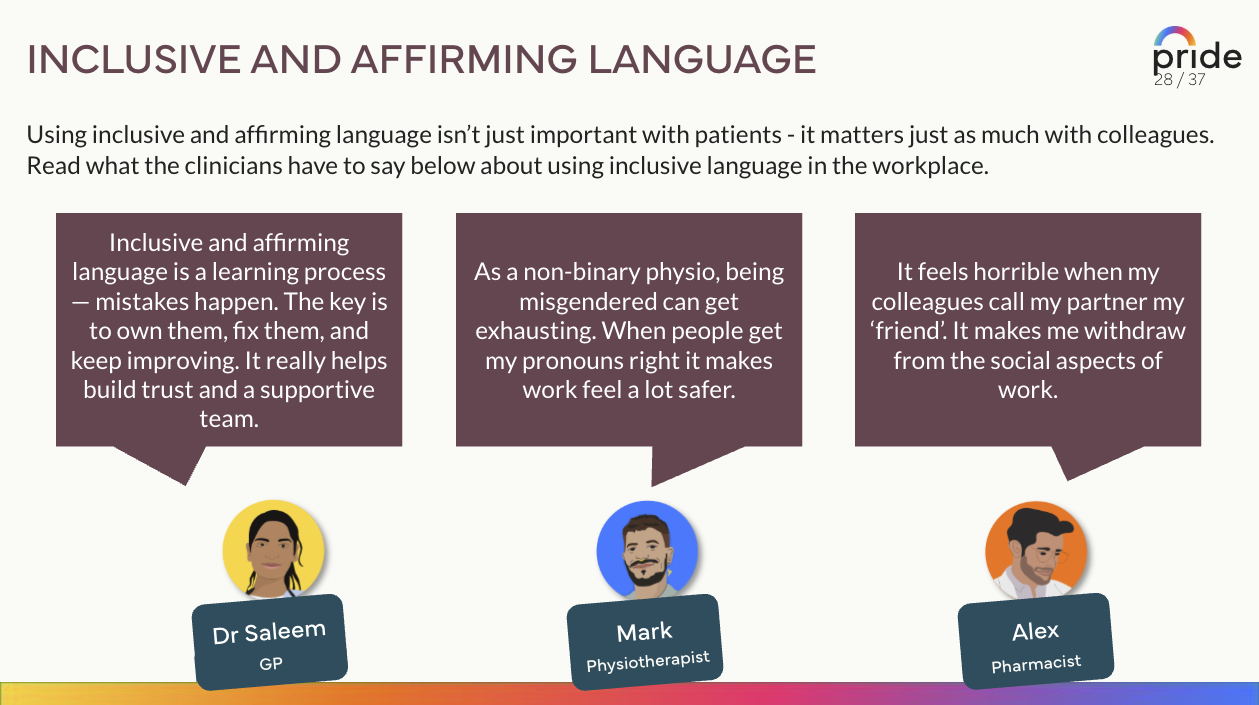
Many LGBTQIA+ people avoid or delay medical treatment because of past experiences of stigma, assumptions or a lack of understanding. Small things, such as the language used on a form or in a consult, can make the difference between a patient feeling safe or feeling judged.
PRIDE: Promoting queer-inclusive professional identities for diversity in primary healthcare ('PRIDE') aims to improve primary care outcomes for the LGBTQIA+ community by co-designing an affirming model of care, including a suite of elearning modules for primary care providers.
As part of the PRIDE project, we developed a series of online modules in collaboration with the University of Queensland. The modules help GPs, pharmacists, allied health professionals and practice staff provide care that is safe, inclusive and affirming for LGBTQIA+ patients.
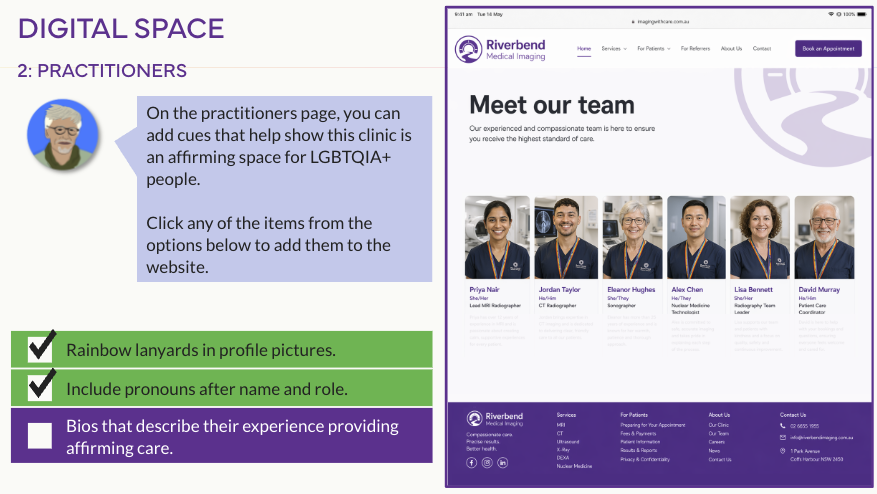
Learners explore practical steps to make their practice more welcoming, from inclusive policies and forms to visual cues on the clinic website that show LGBTQIA+ patients they are welcome.
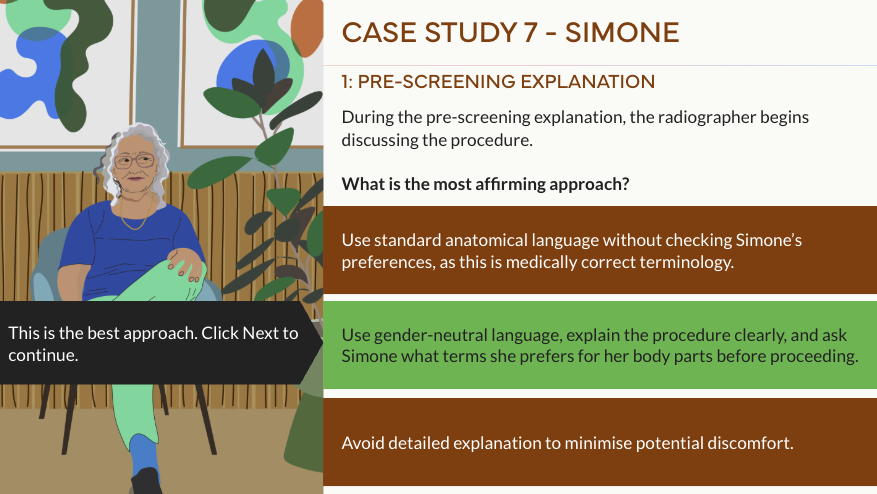
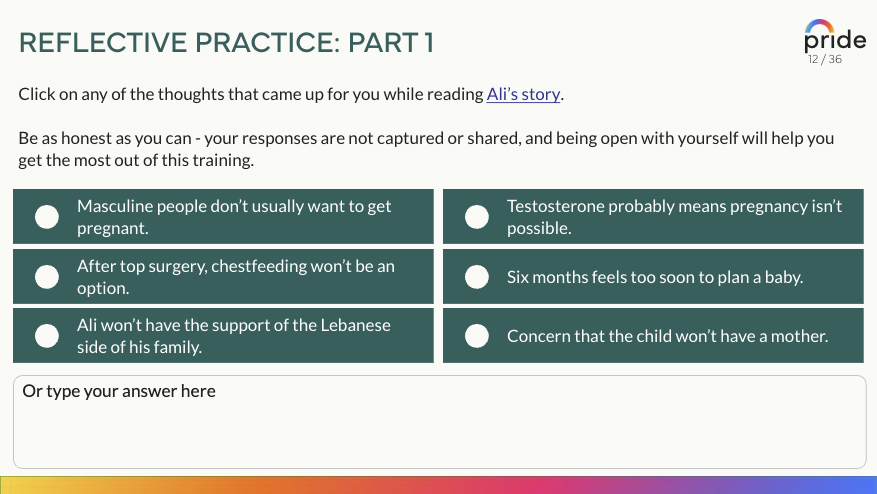
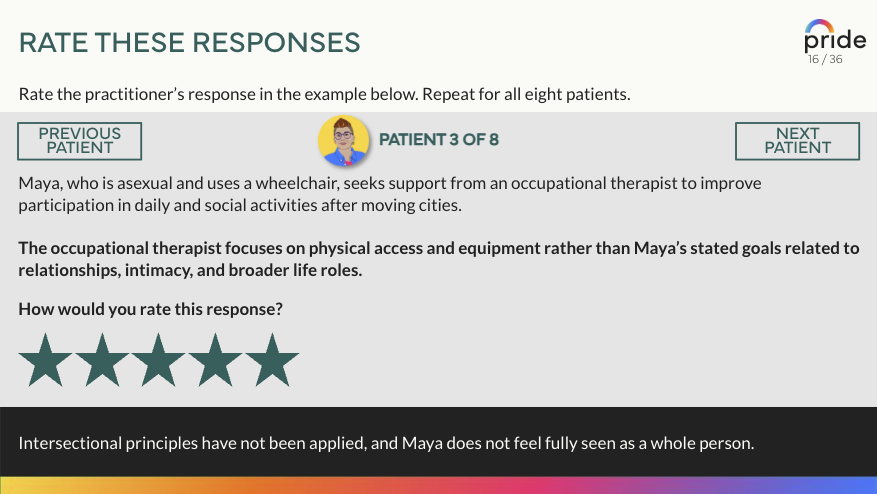
Reflection activities encourage learners to notice their own assumptions and biases. Realistic scenarios ask learners to rate how practitioners respond to the needs of diverse patients, and to think about what they would do differently.
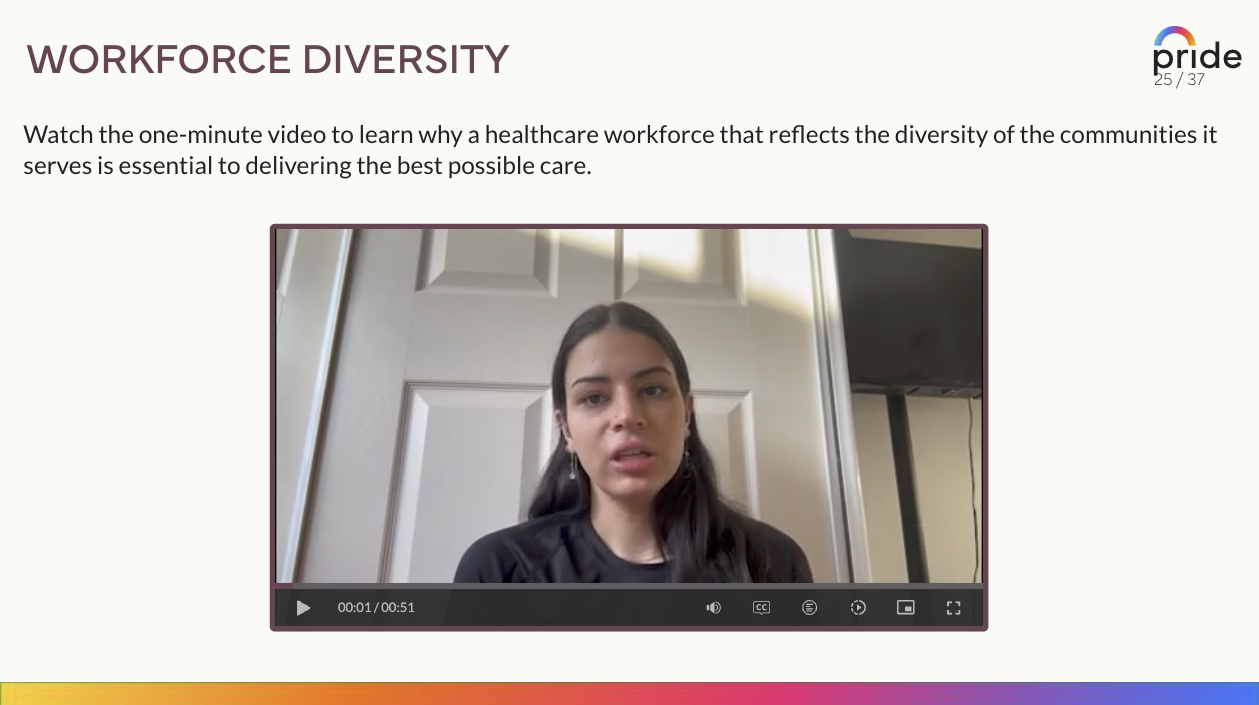
Videos feature LGBTQIA+ patients and practitioners sharing their own experiences of healthcare. Hearing directly from people with lived experience makes the learning more personal and memorable.
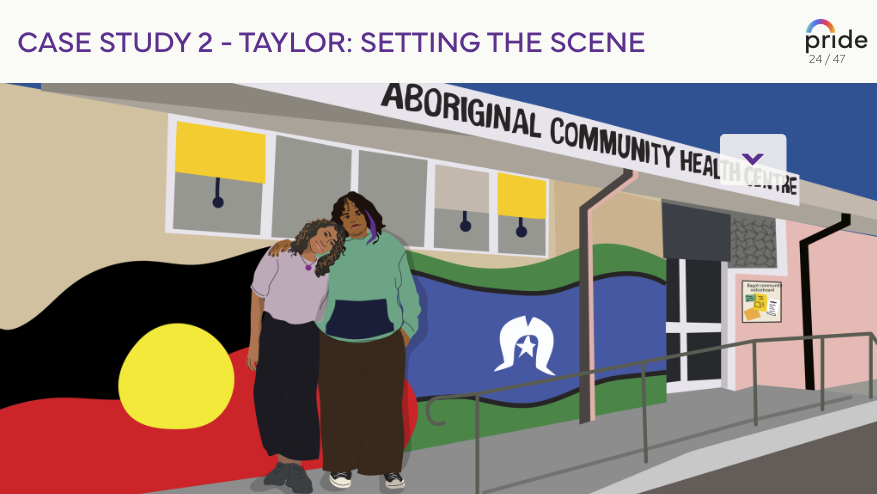
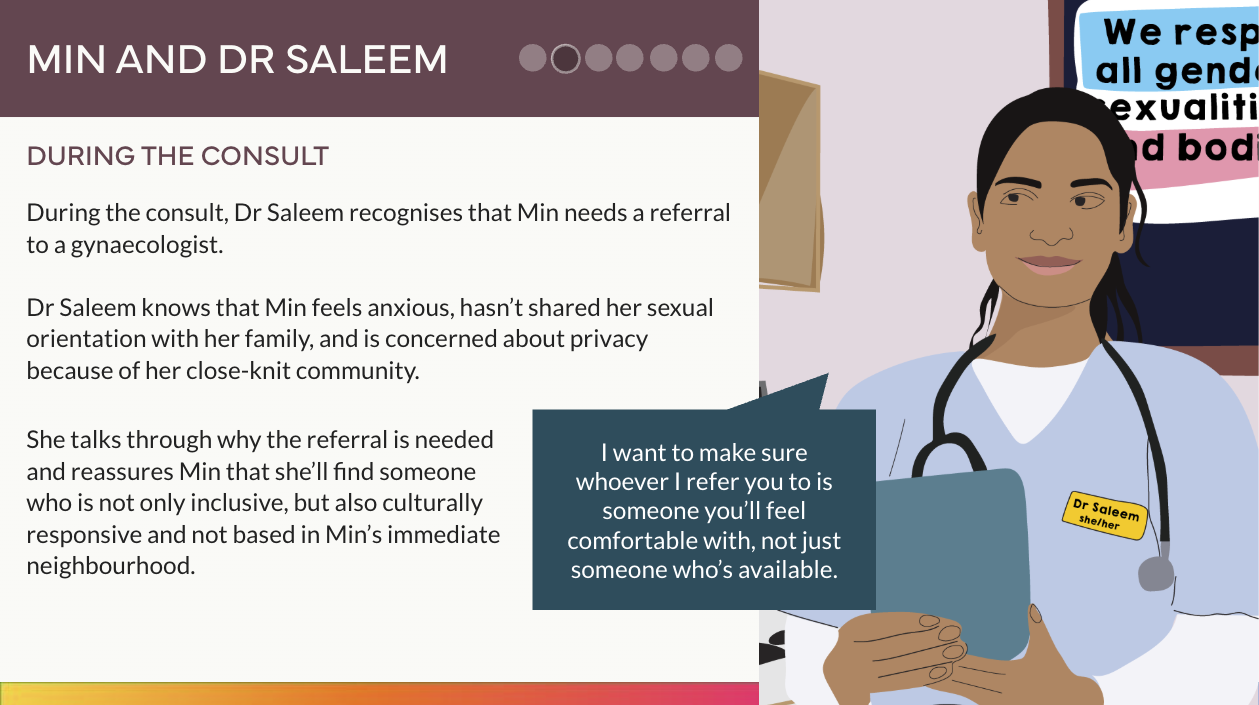
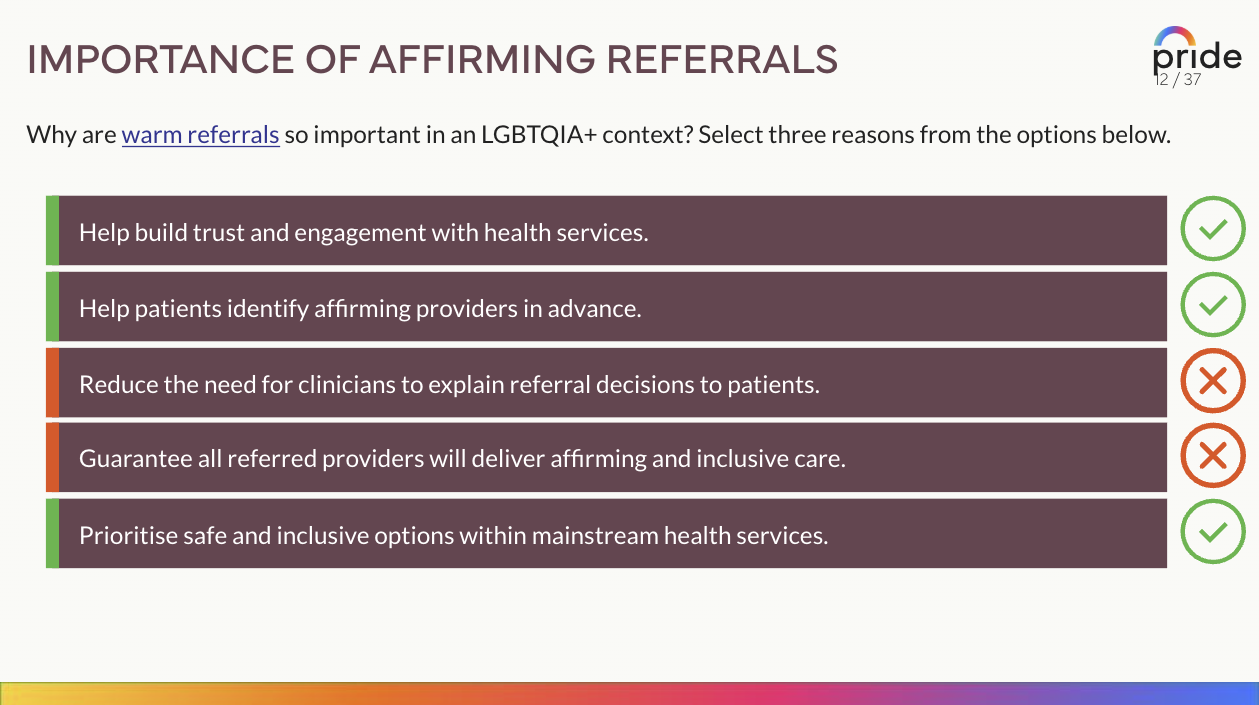
Case studies show how primary care providers can make warm referrals, so patients are connected with other services that will treat them with the same respect and care.
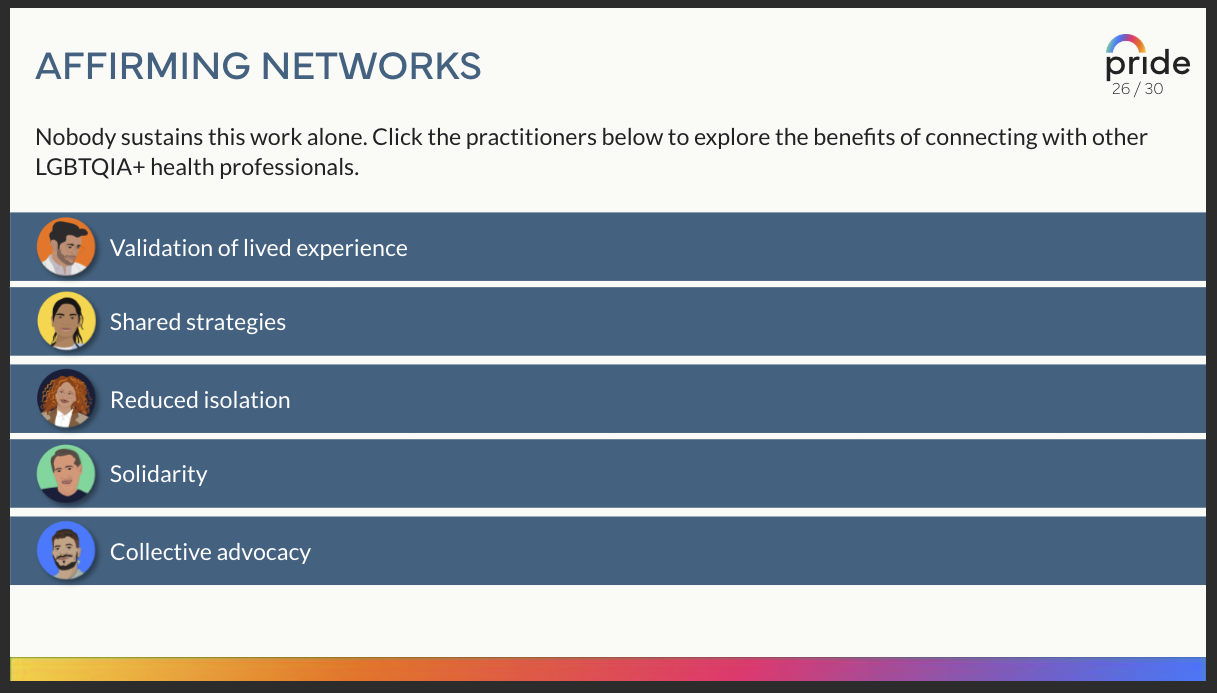
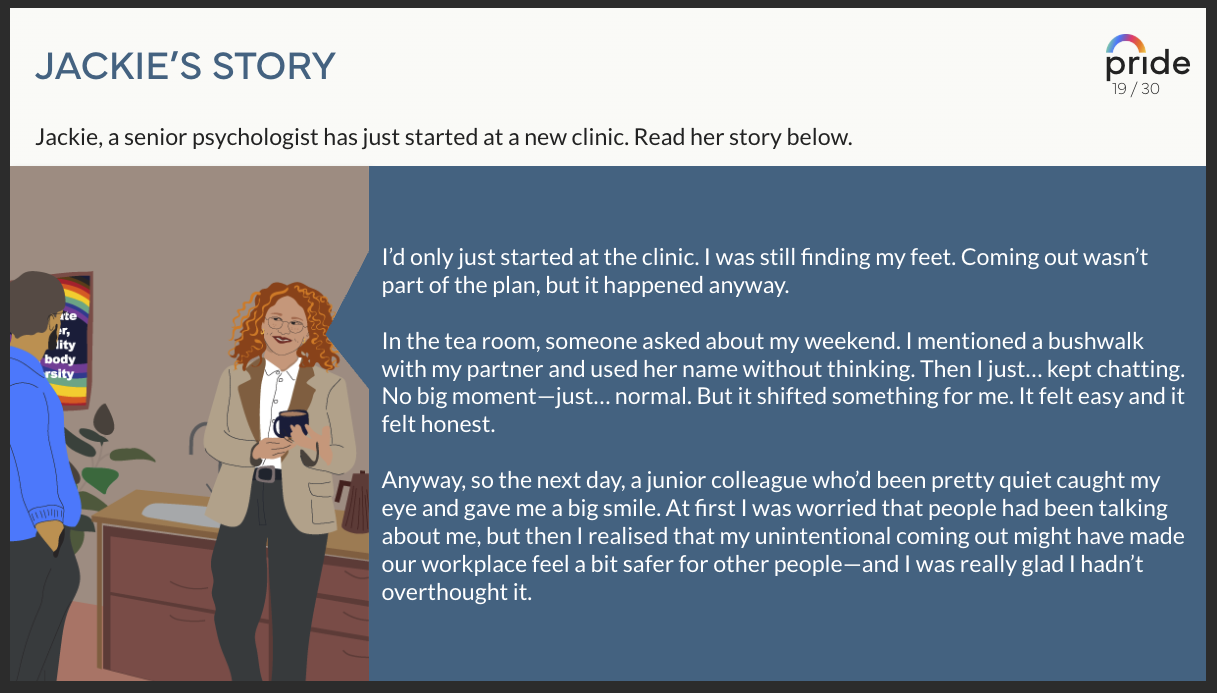
The modules also support LGBTQIA+ health professionals, with content on building affirming professional networks and the benefits and challenges of coming out in the workplace.
These elearning modules were co-designed with LGBTQIA+ patients and practitioners, research experts and primary care organisations.
PRIDE: Promoting queer-inclusive professional identities for diversity in primary healthcare is funded by the Commonwealth Department of Health and Aged Care and led by experts from the University of Queensland.
